June 19, 2026
Car maintenance is crucial to ensuring the safety and reliability of one's vehicle. Regular check-ups can preemptively catch issues that could escalate into larger, more expensive repairs. By being informed, car owners can take necessary steps to prolong the lifespan of their vehicles and ensure the safety of all passengers on the road. Navigating the complexities of automotive systems requires a thorough understanding of mechanical vulnerabilities, which are typically identified during routine professional inspections.
Comprehensive car repair services play an indispensable role in maintaining automotive performance and structural integrity over time. Modern vehicles integrate advanced electronics, intricate hydraulic architecture, and heavy mechanical systems that all demand consistent oversight. When vehicle owners recognize the early warning signs of systemic degradation, they can mitigate the operational risks that frequently culminate in complete mechanical breakdowns on major highways.
Diagnosing Electrical System Failures
Electrical system failures represent a substantial percentage of contemporary automotive issues, primarily because modern vehicles rely heavily on computerized networks. A dead battery remains a leading electrical complication, frequently caused by extreme seasonal temperatures, parasitic drains, or simple component longevity limitations. When vehicle owners encounter dimming cabin lights, slow engine cranking, or repetitive clicking sounds during ignition attempts, the underlying issue typically stems from a depleted or structurally compromised battery cell.
Beyond the battery, a failing alternator introduces severe operational hazards by failing to supply adequate voltage to the vehicle while the engine runs. This specific component breakdown can cause sudden engine stalls, dangerous power steering loss, and erratic sensor behavior across the dashboard console. According to the National Center for Statistics and Analysis, police-reported motor vehicle crashes exceed six million annually in the United States, highlighting the critical importance of maintaining reliable electrical infrastructure to prevent sudden, high-risk highway failures.
Starter motor issues and blown fuses further complicate electrical reliability, often necessitating advanced diagnostic evaluations during standard car repair services. A damaged starter motor completely isolates the driver by preventing the engine from turning over, even when the battery holds a perfect electrical charge. Meanwhile, blown fuses signal localized short circuits or system overloads that require immediate specialized resolution to prevent localized electrical fires and long-term wire harness degradation.
Resolving Brake System Malfunctions
Brake system malfunctions represent an immediate threat to vehicular safety and demand instant professional intervention whenever operational anomalies surface. Worn brake pads are the most frequent culprit within this category, manifesting as loud squealing or metallic grinding sounds when decelerating. Neglecting regular brake pad replacements allows the underlying steel backing plates to contact the rotors directly, which causes severe heat buildup, structural warping, and costly secondary component damage.
Leaky brake fluid poses an even greater risk to drivers because it compromises the hydraulic pressure required to actuate the calipers effectively. When brake fluid reservoirs lose volume due to corroded lines or brittle seals, the brake pedal will typically feel sponge-like or sink completely to the floorboards without slowing the vehicle. Maintaining precise hydraulic pressure is essential for reliable stopping power, especially when navigating dense urban traffic or executing emergency maneuvers under heavy payloads.
Advanced braking components, such as the Anti-lock Brake System (ABS) and specialized brake calipers, also require strategic maintenance during professional car repair services. ABS malfunctions can disable electronic stability controls, increasing the likelihood of dangerous skidding or complete loss of steering control on slick or uneven road surfaces. Ensuring that calipers do not stick or freeze guarantees balanced friction distribution across all four wheels, preventing dangerous vehicular pulling during deceleration sequences.
Optimizing Engine Performance Problems
Engine performance problems can significantly diminish fuel efficiency and shorten the overall operational lifespan of an automobile if left unaddressed. Engine overheating stands out as a critical emergency situation, usually triggered by low coolant levels, broken water pumps, or failed thermostats. Operating an engine at elevated temperatures risks warping aluminum cylinder heads, destroying internal gaskets, and causing catastrophic block failures that require total powertrain replacements.
Misfiring engines present another common performance hurdle, identified by rough idling, acceleration stutters, and active check engine illumination. Misfires typically stem from worn spark plugs, fouled fuel injectors, or compromised ignition coils that disrupt the precise air-fuel combustion cycle. Addressing these combustion imbalances early prevents unburned fuel from traveling down the exhaust stream, where it can cause permanent, expensive damage to the catalytic converter.
Deteriorating fuel economy and persistent engine oil leaks serve as subtle indicators that a vehicle requires comprehensive car repair services. Subtle drops in miles per gallon often point to clogged air intake systems, failing oxygen sensors, or improper tire inflation metrics. Simultaneously, managing oil leaks prevents internal friction wear and limits the environmental hazards associated with active fluid loss, ensuring that the engine operates smoothly throughout its design lifecycle.
Maintaining Steering and Suspension Integrity
Steering and suspension systems are vital for maintaining proper tire alignment, smooth ride quality, and accurate directional control under diverse driving conditions. Worn shock absorbers and struts represent a common structural failure, causing vehicles to bounce excessively over minor road imperfections or dive forward during heavy braking. Over time, unmitigated suspension vibration accelerates tire tread wear and places undue mechanical stress on connected wheel bearings and axle assemblies.
Faulty ball joints and damaged control arm bushings introduce severe steering vulnerabilities that compromise the driver's ability to maintain a straight trajectory. When ball joints dry out or crack, they produce noticeable clunking noises when turning corners or traveling over speed bumps. A complete ball joint failure can cause the wheel assembly to detach partially from the steering knuckle, leading to sudden, uncontrollable deviations on the roadway.
Power steering system leaks and steering rack degradation also demand precise tracking during routine car repair services to ensure safe vehicle handling. A loss of power steering fluid increases steering resistance dramatically, making low-speed maneuvers exceptionally difficult and taxing for the operator. Professional technicians systematically inspect power steering pumps, hydraulic hoses, and electronic steering actuators to ensure immediate steering responsiveness and long-term mechanical dependability.
Addressing Exhaust and Emissions Failures
Exhaust and emissions system failures not only impact environmental air quality but can also degrade overall engine power output and mechanical efficiency. A damaged catalytic converter is a frequent driver of emissions test failures, often rendered inoperable by internal contamination or simple structural aging. When the catalyst material inside the converter breaks down, exhaust flow becomes restricted, leading to high backpressure, sluggish engine performance, and increased tailpipe emissions.
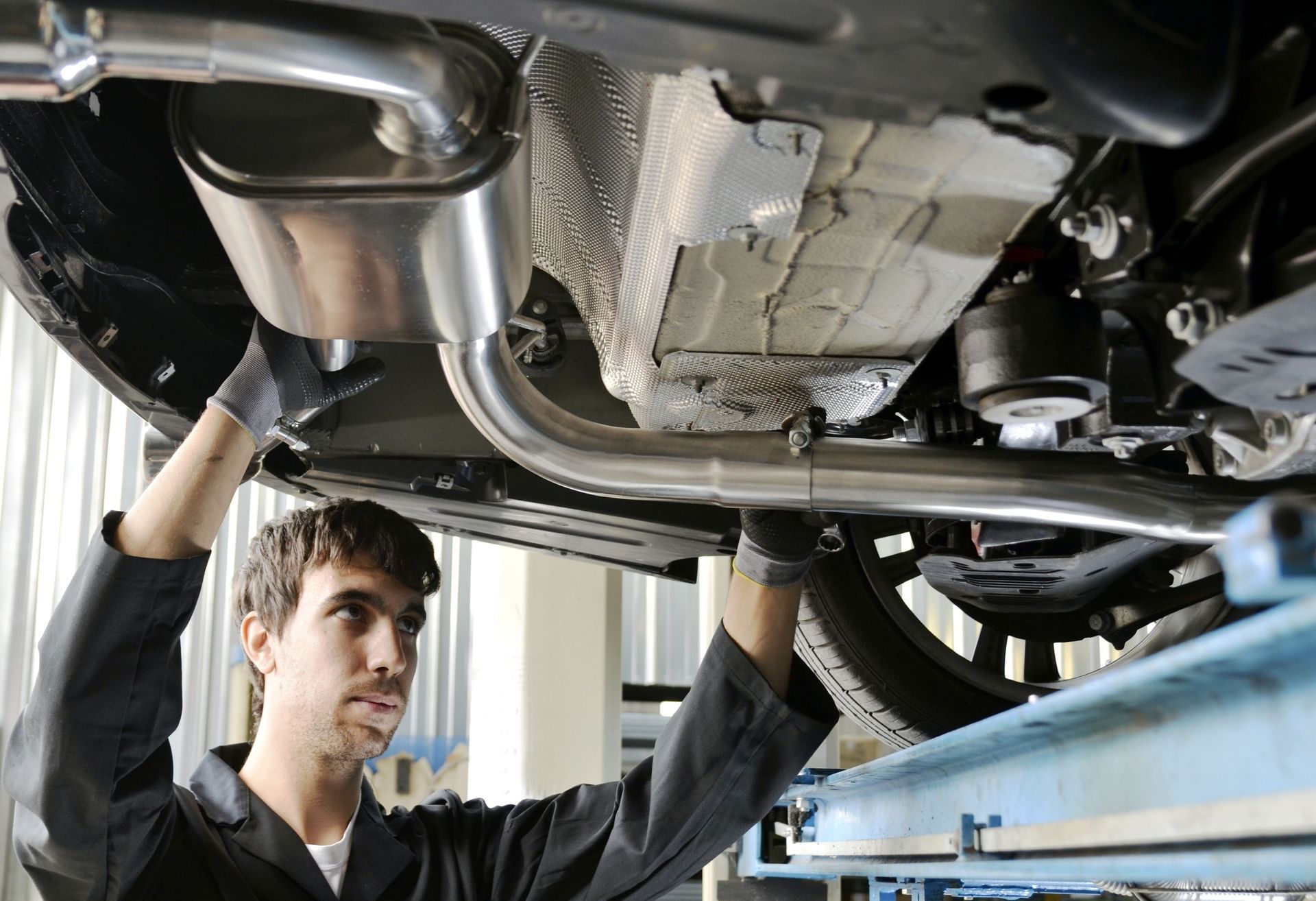
Broken exhaust pipes, rusted mufflers, and failing oxygen sensors represent additional complications that require professional resolution during comprehensive car repair services. Leaking exhaust systems pose severe safety risks because they can allow toxic carbon monoxide gases to seep directly into the passenger cabin. Furthermore, faulty oxygen sensors send inaccurate air-fuel mixture data to the engine control unit, causing the vehicle to burn excessive fuel and operate outside its optimal parameters.
Consistently managing exhaust integrity ensures that the vehicle complies with state environmental regulations while maximizing daily driving efficiency. Technicians utilize specialized diagnostic equipment to read error codes, measure tailpipe output, and verify that all electronic sensors report accurate environmental data. By isolating and correcting these emission variations, vehicle owners protect ambient air quality, maintain legal registration compliance, and optimize long-term mechanical reliability.
Proactive vehicle maintenance serves as the primary defense against unexpected mechanical breakdowns, expensive component replacements, and dangerous highway emergencies. By recognizing the warning signs of electrical failure, braking degradation, engine performance loss, suspension wear, and exhaust system damage, drivers can make informed decisions regarding their automotive investments. Securing professional assistance ensures that minor mechanical variances are corrected before they evolve into major safety hazards on the road. For more information about the services that we offer, reach out to our incredible team at J & J Towing and Service Center today!